How to shift traditional retail shop to e-commerce website in India with step-by-step setup, online selling tools, costs, marketing, and expert business tips.
India’s retail business landscape is changing rapidly.
Earlier, most shop owners depended mainly on:
- Walk-in customers
- Local reputation
- Market footfall
- Seasonal demand
But customer behavior has evolved significantly in recent years.
Today’s consumers increasingly prefer:
- Online shopping
- Home delivery
- Mobile browsing
- WhatsApp orders
- Digital payments
This shift has created a major opportunity for traditional retailers across India to expand online and build scalable e-commerce businesses.
The good news is:
You do not need to close your physical shop.
Instead, you can create a hybrid business model where offline and online sales work together.
Whether you run:
- A clothing shop
- Grocery store
- Mobile accessories business
- Furniture showroom
- Cosmetic store
- Electronics shop
- Gift store
moving online can help you reach more customers and improve long-term business growth.
This guide explains the complete process in a practical and beginner-friendly way.
Quick Answer
To shift a traditional retail shop to an e-commerce website in India, business owners should register their business online, choose an e-commerce platform like Shopify or WooCommerce, upload product listings, set up payment gateways and delivery partners, and promote the store through social media, SEO, and WhatsApp marketing while maintaining offline operations.
Why Traditional Retail Shops Must Go Online in India
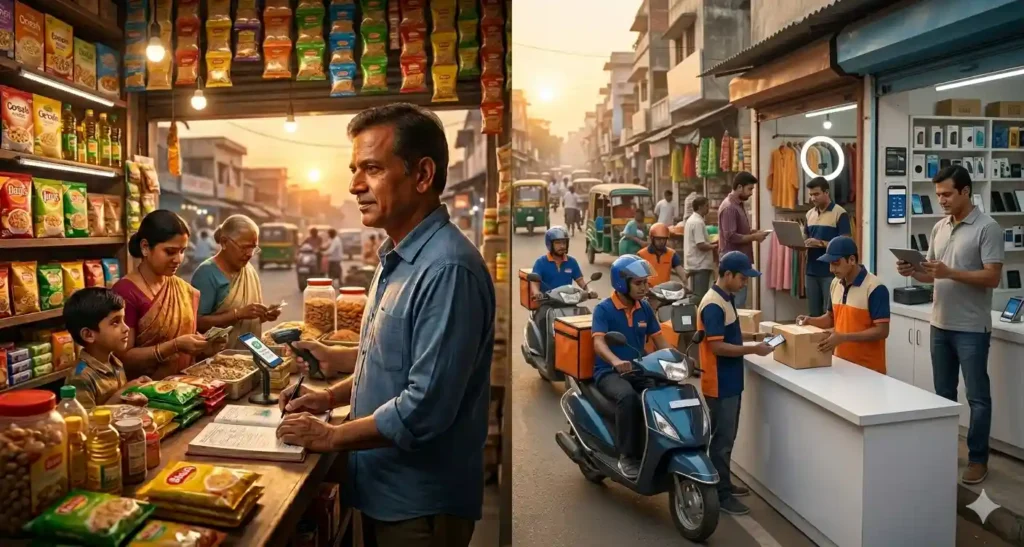
India’s digital economy is growing rapidly because of:
- Smartphone adoption
- Affordable internet
- Digital payments
- Online shopping convenience
Consumers now search online before purchasing products — even when buying locally.
If a retail business has no digital presence, it may lose visibility to competitors already selling online.
Benefits of Moving Your Shop Online
1. Reach More Customers
A physical shop serves a limited geographic area.
An online store can reach:
- Nearby cities
- Other states
- Pan-India customers
2. Increase Sales Opportunities
An e-commerce store allows:
- 24/7 product visibility
- Festive sales campaigns
- Repeat customer engagement
3. Reduce Dependency on Footfall
Retail businesses often struggle during:
- Seasonal slowdowns
- Weather disruptions
- Local competition
Online sales help diversify revenue sources.
4. Build Brand Identity
A website improves:
- Customer trust
- Brand recognition
- Professional credibility
Types of E-Commerce Models for Retail Shops
1. Own E-Commerce Website
Create your own online store using:
- Shopify
- WooCommerce
- Wix
Benefits
- Full brand control
- Better customer ownership
- Long-term scalability
2. Marketplace Selling
Sell products through:
- Amazon
- Flipkart
- Meesho
Benefits
- Faster visibility
- Existing customer traffic
- Easier startup process
3. Social Commerce
Sell using:
- Instagram Shop
- WhatsApp Business
- Facebook Marketplace
Best For
- Fashion
- Home decor
- Gifts
- Cosmetics
4. Hybrid Model (Recommended)
This combines:
- Physical shop
- Own website
- Marketplace selling
- Social media sales
This is often the most practical approach for Indian retailers.
Step-by-Step Process to Shift Retail Shop to E-Commerce
Step 1: Register Your Business Properly
You may need:
- GST registration
- Business bank account
- Udyam registration
Useful resources:
Step 2: Choose the Right E-Commerce Platform
Shopify
Easy for beginners.
Official Website:
Shopify India
WooCommerce
Flexible WordPress-based solution.
Official Website:
WooCommerce
Meesho
Useful for social commerce and reselling.
Official Website:
Meesho
Step 3: Create Product Catalog
Add:
- Product title
- Pricing
- Variants
- Product descriptions
- High-quality images
Expert Tip
Professional product photography improves conversion rates significantly.
Step 4: Set Up Payment Gateway
Popular options:
- Razorpay
- Paytm Payment Gateway
- Cashfree
Enable:
- UPI
- Debit cards
- Credit cards
- Wallets
- Net banking
Step 5: Arrange Delivery & Logistics
Delivery partners:
- Shiprocket
- Delhivery
- India Post
Important setup:
- Shipping rates
- Delivery timelines
- Return policy
Step 6: Build Mobile-Friendly Website
Your website should include:
- Homepage
- Product pages
- Contact page
- About us section
- FAQ page
- Return/refund policy
Most Indian users shop through smartphones, so mobile optimization is critical.
Step 7: Start Digital Marketing
1. Instagram Marketing
Use:
- Reels
- Product videos
- Customer testimonials
2. WhatsApp Marketing
Excellent for:
- Repeat customers
- Local audiences
- Product updates
3. Google SEO
Publish:
- Product blogs
- Buying guides
- Search-optimized pages
4. Paid Advertising
Popular platforms:
- Google Ads
- Meta Ads
Use ads carefully with realistic budgets initially.
Cost of Starting E-Commerce Business in India
| Component | Estimated Cost |
| Website setup | ₹5,000–₹30,000 |
| Domain & hosting | ₹1,000–₹5,000/year |
| Product photography | ₹2,000–₹15,000 |
| Marketing | ₹5,000–₹50,000/month |
| Packaging & shipping | Variable |
Common Mistakes Retailers Should Avoid
1. Ignoring Product Photography
Poor visuals reduce customer trust.
2. No Marketing Strategy
A website alone does not generate sales automatically.
3. Weak Inventory Management
Stock mismatch causes customer dissatisfaction.
4. Poor Mobile Experience
Slow websites hurt conversion rates.
5. Copying Competitors Blindly
Every market has different customer behavior.
Original Expert Insight: Why Many Retail Shops Fail Online
Many retailers assume that launching a website automatically creates sales.
In reality, online success usually depends on:
- Consistent customer communication
- Strong product presentation
- Fast delivery experience
- Digital trust building
- Repeat customer retention
Retailers who combine offline trust with online convenience often perform better long-term.
Real Business Example
A traditional footwear retailer in Lucknow started selling products online through Instagram and Shopify during festival season.
Initially:
- Orders came mainly from local customers
After improving:
- Product photography
- WhatsApp communication
- Packaging quality
the business began receiving orders from multiple states.
The owner continued operating the physical shop while gradually expanding online sales.
Expert Tips for Retail Shop Owners
Start Small
Do not overinvest initially.
Focus on Repeat Customers
Retention is often more profitable than constant new customer acquisition.
Use WhatsApp Smartly
Very effective for Indian local businesses.
Build Trust
Customer reviews and clear return policies matter.
Track Business Analytics
Understand:
- Best-selling products
- Traffic sources
- Customer behavior
Overview: Key Takeaways
How to Shift Traditional Retail Shop to E-Commerce Website in India
- Register business and GST
- Choose e-commerce platform
- Upload product listings
- Set up payment gateway
- Connect logistics partners
- Launch mobile-friendly website
- Promote through digital marketing
Government & Business Resources
Useful official resources:
Frequently Asked Questions (FAQs)
1. Can I run online and offline business together?
Yes, hybrid retail models are very effective in India.
2. Which platform is best for beginners?
Shopify and Meesho are beginner-friendly options.
3. Do I need GST to sell online?
Generally yes, especially for marketplace selling.
4. How much investment is required?
Basic setup can start from around ₹10,000–₹50,000 depending on scale.
5. Can I sell products on Amazon from my retail shop?
Yes, you can register as an Amazon seller and list products online.
6. Is WhatsApp enough for online selling?
It works well initially, but a website provides better scalability and professionalism.
7. How long does setup take?
A simple online store can often be launched within 1–2 weeks.
Summary
Shifting a traditional retail shop to an e-commerce website in India is becoming an important growth strategy for small businesses in 2026.
The biggest advantage is that shop owners do not need to abandon their physical stores. Instead, they can combine local trust with digital reach to build a stronger and more scalable business model.
Businesses that focus on:
- Customer experience
- Consistent branding
- Product quality
- Digital marketing
- Operational discipline
Are generally better positioned to grow successfully in India’s rapidly evolving digital commerce ecosystem.
Also Read –Top Profitable Business Ideas for Tier 2 Cities in India

Founded in 2026 by Rajiv Rawat, Businessbadhao has grown from a simple vision into a platform dedicated to delivering valuable insights and high-quality content. What began as a passion for sharing knowledge and helping businesses grow has evolved into a trusted source of information for entrepreneurs, professionals, and ambitious individuals.