Franchise Business under 2 Lakh Investment in India – Starting a profitable venture with a budget of under ₹2 lakh is one of the most practical routes to business ownership in India. With the rise of micro-franchising, local service hubs, and digital distribution models, entrepreneurs can leverage established brand value without taking on heavy capital risks.
This comprehensive guide details high-ROI franchise categories, financial breakdowns, compliance steps, and risk mitigation strategies tailored to Indian market conditions.
Why Choose a Sub-₹2 Lakh Micro-Franchise?
A micro-franchise allows you to launch a business with reduced operational risk. Unlike independent startups, a franchise provides a battle-tested operational template, established supply chains, and instant brand trust.
- Low Capital Exposure: Entering the market under ₹2 lakh keeps initial financial risk low.
- Faster Break-Even Period: Lower setup costs often lead to faster capital recovery, typically within 6 to 12 months.
- Minimal Infrastructure Requirements: Most micro-franchises require less than 150 sq. ft. of space, and many can be run as home-based or digital setups.
- Turnkey Support: franchisors generally handle initial staff training, marketing collateral, and software/POS integration.
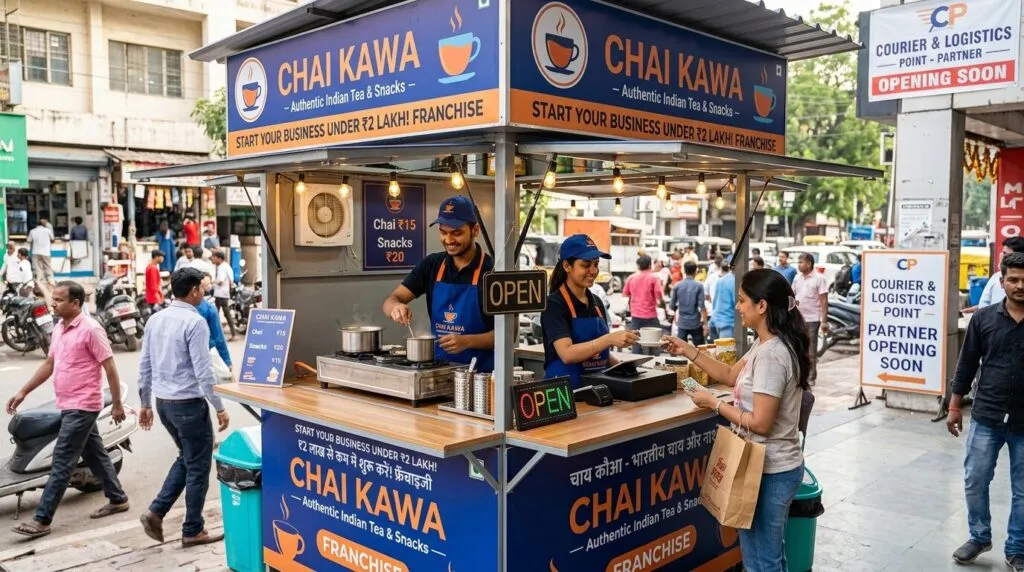
Top Low-Cost Franchise Sectors Under ₹2 Lakh
Category A: Courier, Logistics & Pickup Hubs
The rapid expansion of e-commerce across Tier-1, Tier-2, and Tier-3 cities makes logistics a resilient sector.
- Model: Franchisees serve as local pickup/booking points, last-mile delivery partners, or sorting kiosks.
- Typical Investment: ₹50,000 to ₹1.5 Lakh.
- Space Needed: 100 – 200 sq. ft.
- Expected Profit Margin: 15% to 30% per booking/shipment.
- Popular Brands: DTDC, InXpress, Shadowfax, Delhivery Direct counters.
Category B: Kiosk & Express Beverage Outlets
Tea, coffee, and quick beverage counters maintain steady year-round demand and high daily transaction volume.
- Model: Compact takeaway counters or mobile carts situated in high-footfall areas.
- Typical Investment: ₹1.2 Lakh to ₹2 Lakh.
- Space Needed: 50 – 100 sq. ft. or mobile cart setup.
- Expected Profit Margin: 35% to 50% on food and beverage items.
- Popular Brands: Maa Ki Chai, Tea Time, Lassi Shop, local regional tea chains.
Category C: Healthcare Collection Centers
Diagnostic chains frequently expand their network by partnering with local entrepreneurs for sample collection.
- Model: Patient registration and blood sample collection point; samples are picked up daily by the central lab network.
- Typical Investment: ₹1.5 Lakh to ₹2 Lakh (for basic refrigeration, furniture, and branding).
- Space Needed: 120 – 200 sq. ft.
- Expected Profit Margin: 20% to 35% commission per test test booked.
- Popular Brands: Thyrocare, Redcliffe Labs, Lal PathLabs collection points.
Category D: EdTech & Skill Development Distribution
Digital learning tools and supplemental education models require low physical overhead.
- Model: Operating local sales distribution for skill packages, test prep kits, or franchisee learning centers.
- Typical Investment: ₹50,000 to ₹1.8 Lakh.
- Space Needed: Work-from-home or a small desk setup.
- Expected Profit Margin: 30% to 55% per enrollment/sale.
- Popular Brands: Brainywood, Kids Age distribution, local coding & robotics partners.
Detailed Financial & Cost Comparison
Evaluating the capital allocation for a ₹2 lakh budget ensures funds are properly distributed across initial setup and working capital.
| Sector | Initial Franchise Fee | Equipment & Branding | Working Capital | Monthly Revenue Potential | Estimated Payback Period |
| Logistics / Courier | ₹30,000 – ₹50,000 | ₹40,000 – ₹60,000 | ₹20,000 – ₹30,000 | ₹40,000 – ₹90,000 | 6 – 9 Months |
| Tea / Beverage Kiosk | ₹50,000 – ₹1,000,000 | ₹60,000 – ₹80,000 | ₹20,000 | ₹60,000 – ₹1,20,000 | 5 – 8 Months |
| Pathology Collection | ₹50,000 – ₹80,000 | ₹50,000 – ₹70,000 | ₹30,000 | ₹50,000 – ₹1,00,000 | 8 – 12 Months |
| EdTech / Skill Franchise | ₹40,000 – ₹1,20,000 | ₹10,000 – ₹20,000 | ₹15,000 | ₹35,000 – ₹80,000 | 4 – 7 Months |
How to Select the Right Franchise (Step-by-Step)
1.Assess Local Footfall & Market Demand:
Analyze the target location before contacting franchisors. A beverage kiosk requires dense foot traffic near transit hubs or colleges, whereas a courier point benefits from proximity to commercial markets or residential clusters.
2.Review the Franchise Agreement Carefully:
Check royalty structure details, lock-in periods, renewal fees, and territory exclusivity rules. Ensure there are no hidden supply chain markup costs.
3.Verify Licensing & Local Permits:
Obtain necessary registrations early. Requirements typically include GST registration, Shop & Establishment license, and FSSAI license for food/beverage operations.
4.Set Up Operations and Soft Launch:
Complete franchisor training, integrate POS or booking software, install mandated branding, and run a 3-day test run before full commercial opening.
Also Read: 15 Profitable Small Business Ideas in India 2026 with Low Investment
Required Registrations and Compliance
Running a legitimate franchise operation in India requires adhering to federal and state business regulations:
- Business Entity Registration: Register as a Sole Proprietorship, Partnership Firm, or One Person Company (OPC) based on ownership structure.
- GST Registration: Mandatory for multi-state operations, logistics partnerships, or businesses exceeding statutory turnover thresholds.
- Shop & Establishment Act Registration: Required for commercial physical spaces within local municipal boundaries.
- FSSAI License: Compulsory for any enterprise dealing with food, beverages, or edible packaged products.
- Trade License: Issued by local municipal authorities to permit business activities in specific commercial zones.
Financial Planning & Risk Management
Micro-businesses must maintain strict cash-flow management to stay profitable:
- Maintain Reserve Capital: Keep at least 15% to 20% of your total budget (₹30,000 – ₹40,000) as liquid cash to cover initial operational overheads and lease obligations.
- Control Fixed Costs: Avoid high-rent spaces. Rent should ideally remain under 15% of total estimated gross revenue.
- Monitor Inventory Turnover: For product-based franchises, manage inventory tightly to minimize shelf rot and capital lock-up.
Franchise Business under 2 Lakh Investment in India (FAQs)
Can I start a franchise business under ₹2 lakh without previous business experience?
Yes. Most micro-franchise parent companies provide initial operational manuals, POS software, and hands-on staff training to bring new operators up to speed.
Are there ongoing royalty fees in low-cost franchises?
It varies by company. Many low-cost service franchises do not charge ongoing royalty fees; instead, they make revenue through initial package fees, equipment sales, or raw material supply markups.
Is shop space mandatory for all sub-₹2 lakh franchises?
No. While beverage kiosks and collection centers require small physical spaces, digital services, EdTech distribution, and doorstep delivery hubs can often be run home-based or remotely.
How soon can a sub-₹2 lakh franchise achieve profitability?
Most low-investment franchises reach break-even within 5 to 10 months, depending on location quality, customer volume, and fixed overhead control.
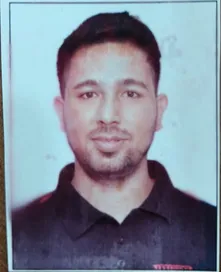
Founded in 2026 by Rajiv Rawat, Businessbadhao has grown from a simple vision into a platform dedicated to delivering valuable insights and high-quality content. What began as a passion for sharing knowledge and helping businesses grow has evolved into a trusted source of information for entrepreneurs, professionals, and ambitious individuals.